Foundation Subjects
There are eight foundation subjects; Design Technology, Computing, History, Geography, P.E., Art and Design and Music. We also teach French as our Modern Foreign Language in KS2. Spanish Lessons are offered to all as an after school club. Please click on each subject to find out more.
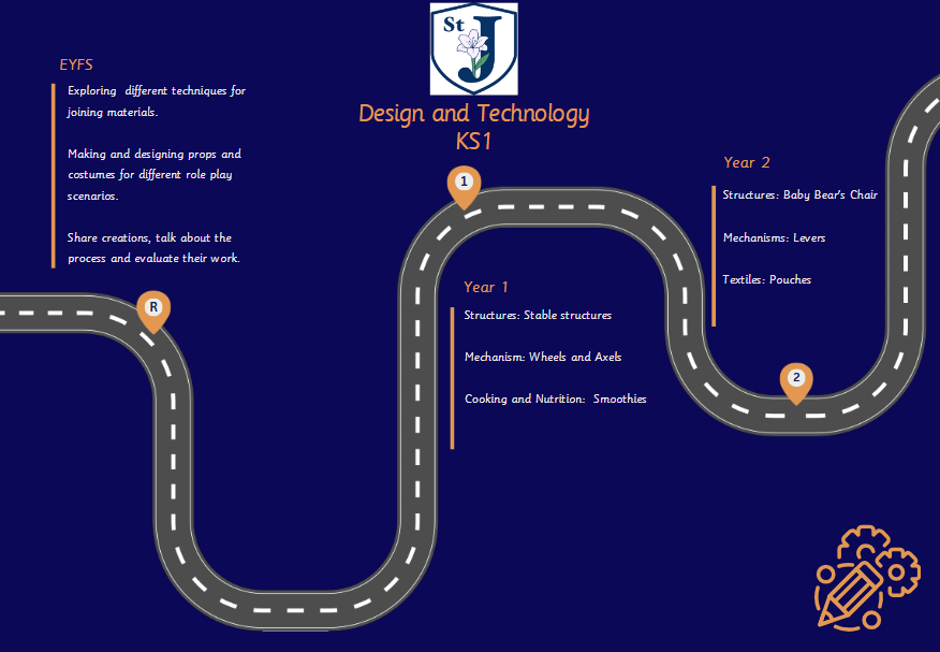
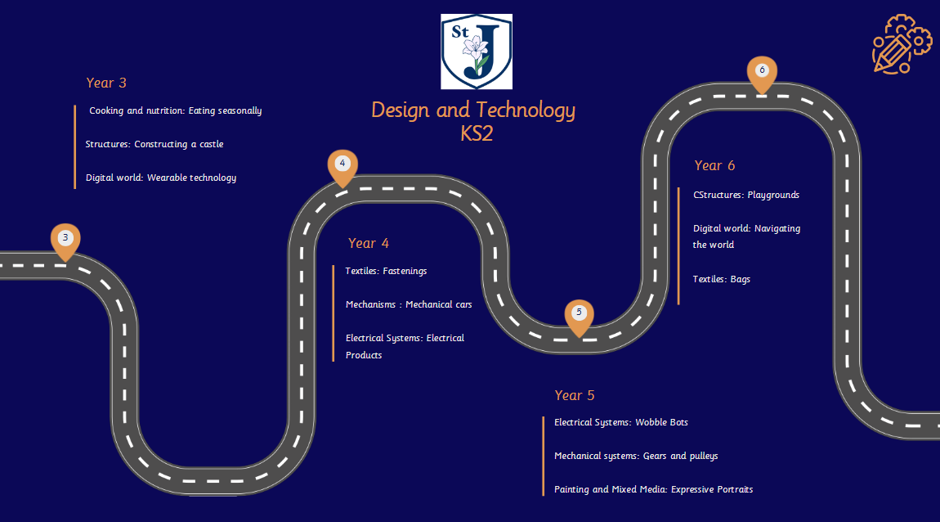
Design Technology
At St Joseph’s Catholic Primary School, we believe that Design and Technology is an inspiring, practical and creative subject that enables children to become innovative problem-solvers, confident designers and resilient learners. Rooted in our Catholic vision of letting our lights shine before others and guided by our values of Service, Joy, Forgiveness, Gratitude, Courage and Inclusion, we encourage pupils to use their creativity and talents to make a positive contribution to the world around them.
Through our Design and Technology curriculum, children develop the knowledge, understanding and technical skills needed to design, make and evaluate purposeful products for real-life contexts. We aim to engage, inspire and challenge pupils, equipping them with the confidence to take risks, experiment with ideas and learn from mistakes as they work through the design process. Pupils are encouraged to think critically, solve problems independently and collaboratively, and reflect on how design and technology have shaped, and continue to shape, our everyday lives and wider society.
At St Joseph’s, we ensure a carefully planned and progressive curriculum from EYFS to Year 6 that builds on prior learning and develops a secure understanding of key concepts, skills and vocabulary. Children are provided with memorable, rich and varied learning experiences that enable them to apply their knowledge across a range of contexts, including engineering, structures, mechanisms, textiles, food and nutrition, and digital technology. Cross-curricular links are made wherever possible, allowing pupils to draw upon learning from subjects such as science, mathematics, art and computing.
Our Design and Technology curriculum fosters curiosity, creativity and perseverance while encouraging children to become reflective learners who can evaluate, improve and take pride in their work. By the time they leave St Joseph’s, pupils will have developed the practical skills, confidence and aspirations needed to become innovative thinkers, responsible citizens and lifelong learners who recognise the importance of design and technology in shaping the future and serving the common good.
Computing
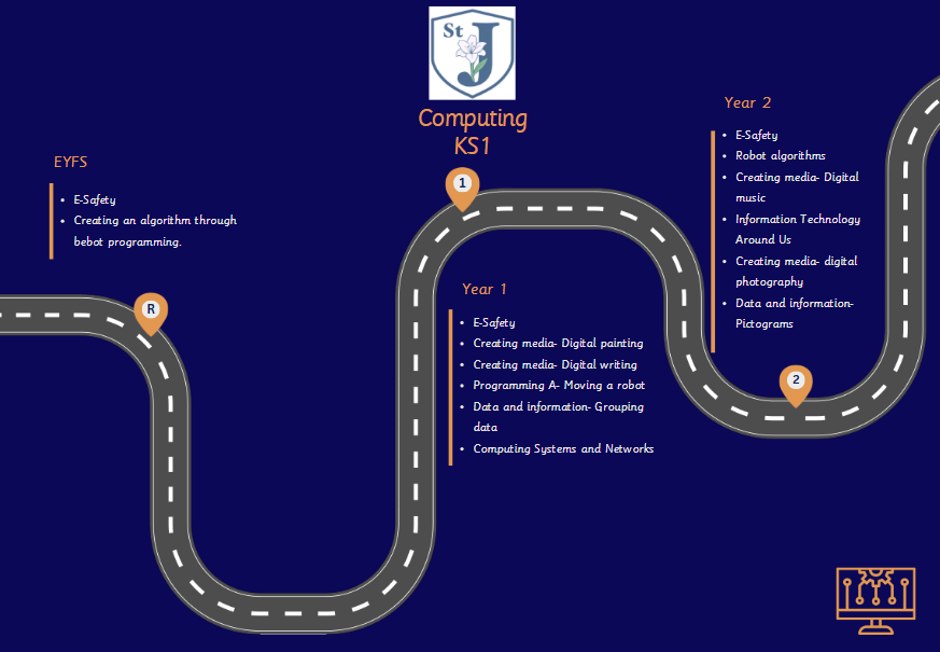
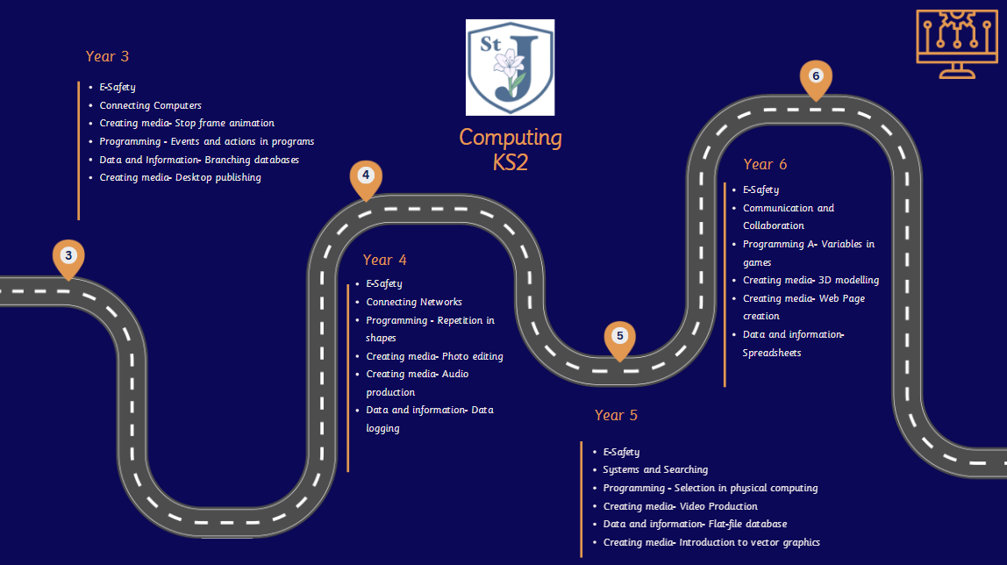
At St Joseph's, we follow the curriculum developed by the National Centre for Computing Education (NCCE), which provides a clear and progressive sequence of learning from Year 1 through to Year 6. Through a balance of computer science, information technology and digital literacy, pupils develop key knowledge and skills through practical, hands-on activities. Lessons are carefully structured to build understanding over time, enabling pupils to become confident users and creators of technology.
As a result, pupils develop the knowledge, skills and vocabulary needed to participate successfully in an increasingly digital world. They become confident problem-solvers, logical thinkers and responsible digital citizens who can apply their learning across the curriculum and beyond. Through regular opportunities to create, innovate and evaluate, pupils leave St Joseph's well prepared for the next stage of their education.
Examples of this work can be seen by clicking the images below.
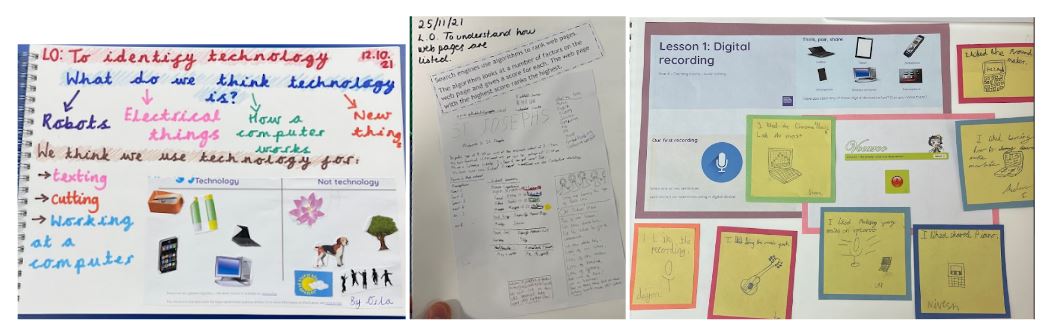
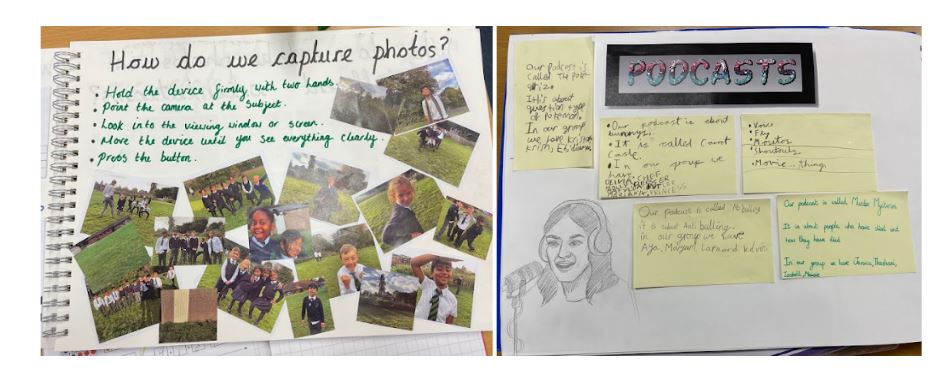
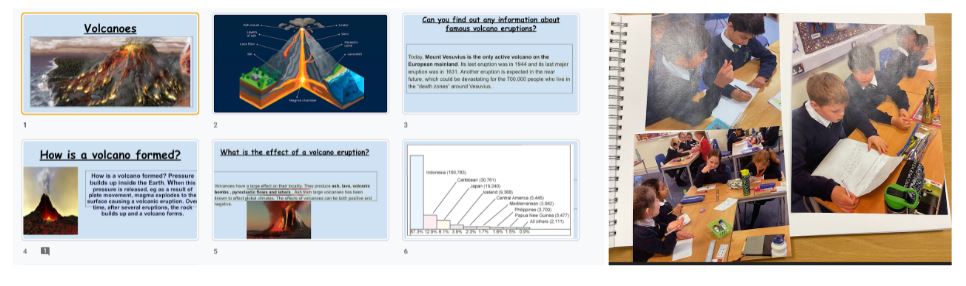
Children have regular access to a range of resources that enable them to strive in the computing curriculum as well as other subjects. At school, each year group have access to laptops, iPads and programmable toys.
We celebrate computing during our computing week where along with other activities, children learn about famous people in computing history, take part in coding activities and update their e-safety knowledge.
Safer Internet Week 2026
For up-to-date information about e-safety, please see our presentations below. They include recorded audio by Mr Simons, one of our e-safety officers, and include information about safe online gaming, privacy settings and parental controls.
Online Safety for KS1
 Online Safety KS1.pptx
Online Safety for KS2
History
Intent
At St. Joseph’s, our History curriculum aims to excite the children and allow them to develop their skills as historians. It also aims to ensure coverage and progression, and take account of the children’s previous learning. History allows opportunities for cross curricular links to be made to ensure the children have various opportunities to apply their knowledge and understanding. As a Catholic school, we believe History provides vital opportunities to explore themes of justice, stewardship, human dignity, and moral responsibility. We encourage regular references to timelines to ensure chronology as well as allowing the children to make links between topics that they learn throughout their time here. At St. Joseph’s, History provides children with memorable, rich and varied learning experiences across all age ranges from EYFS to Year 6.
Implementation
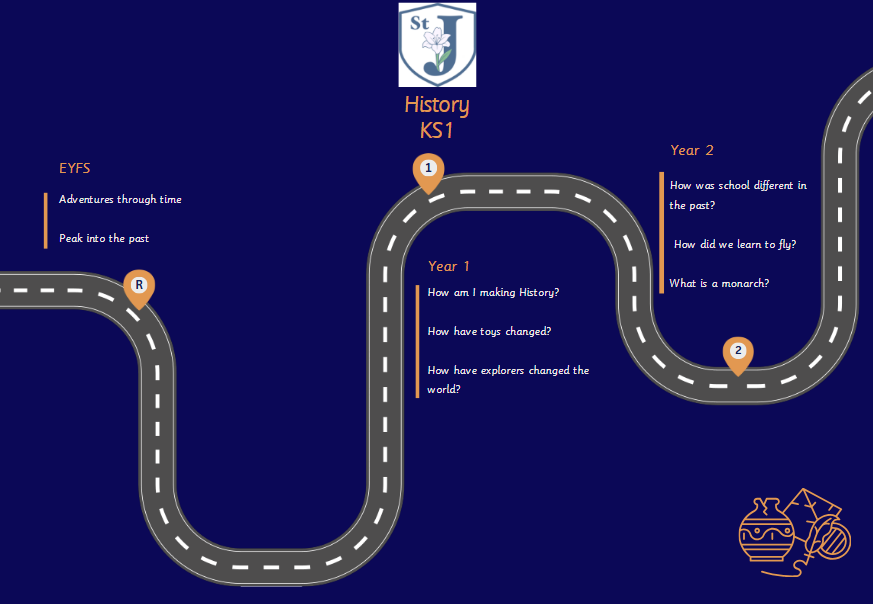
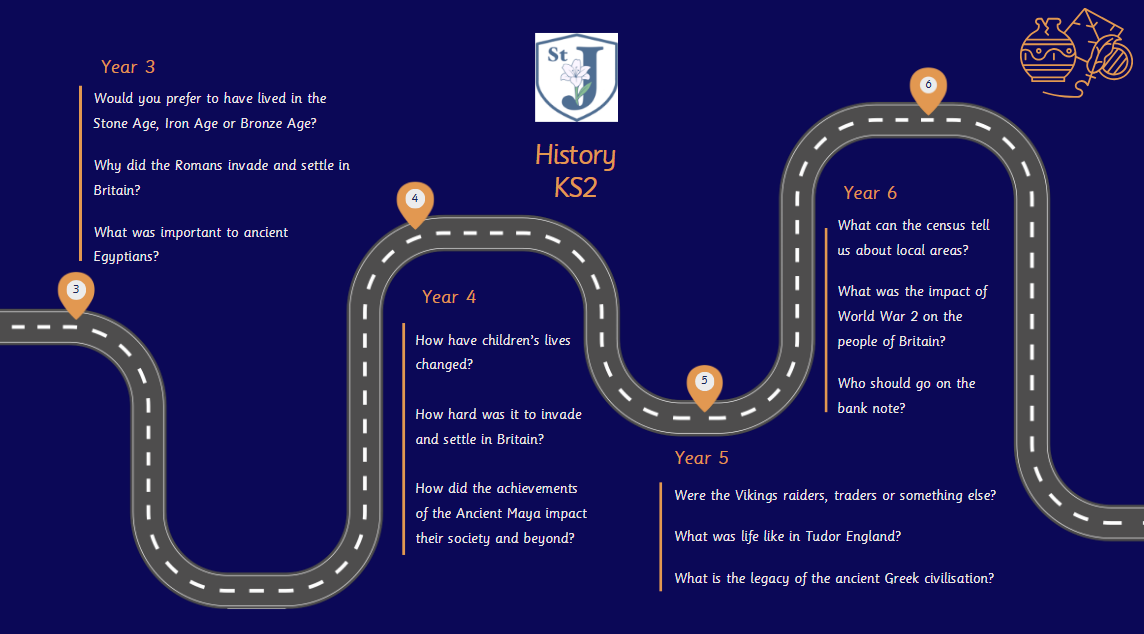
We follow the Kapow Primary History scheme, which provides a carefully sequenced and ambitious curriculum aligned with the National Curriculum. It supports strong progression in historical knowledge, vocabulary, and disciplinary skills from EYFS to Year 6.
Key features of our implementation:
- History is taught as a discrete subject in alternating half terms with Geography, allowing for depth and focus.
- Each unit begins with a key enquiry question, encouraging children to act as historians: investigating sources, interpreting evidence, and drawing conclusions.
- Units cover a wide range of periods and cultures, including local history and diverse global perspectives.
- Teaching strategies include storytelling, artefacts, discussion, drama, and technology to make history engaging and accessible.
- Teachers are supported with high-quality planning, subject knowledge videos, and ongoing CPD through Kapow, ensuring consistent delivery and inclusive practice.
Assessment is ongoing through questioning, discussion, written work, and end-of-unit quizzes or tasks. Knowledge organisers are used to help pupils retain key facts and vocabulary.
Impact
By the end of their primary journey at St Joseph’s, pupils will:
- Develop a secure and well-rounded knowledge of history, including significant events, individuals and developments from a range of periods and places.
- Think and work as young historians, asking meaningful questions, exploring and interpreting evidence, and communicating their ideas clearly using appropriate historical language.
- Recognise links between the past and the world today, considering how themes such as fairness, diversity, change and individual choices have shaped people’s lives and societies.
- Approach the experiences of others with empathy and respect, appreciating that people throughout history have lived within a wide variety of cultures, communities, beliefs and circumstances.
- Move confidently into the next stage of their learning, equipped with historical knowledge, curiosity and an awareness of their responsibilities as informed and active citizens.
Through our History curriculum, we aim to nurture both knowledge and character. Children are encouraged to explore the richness and complexity of the past, understand different perspectives, and reflect upon how history has shaped the world they live in and their own place within it.
Geography
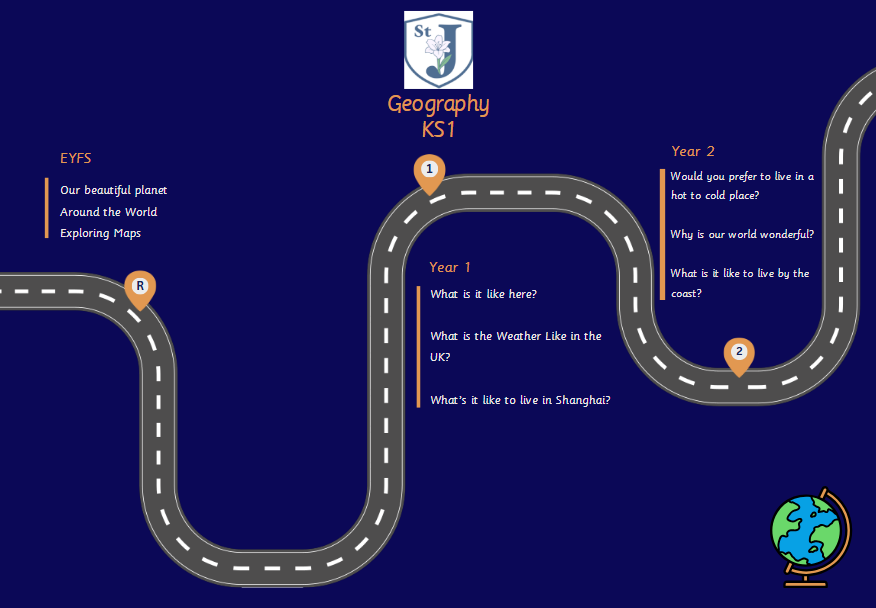
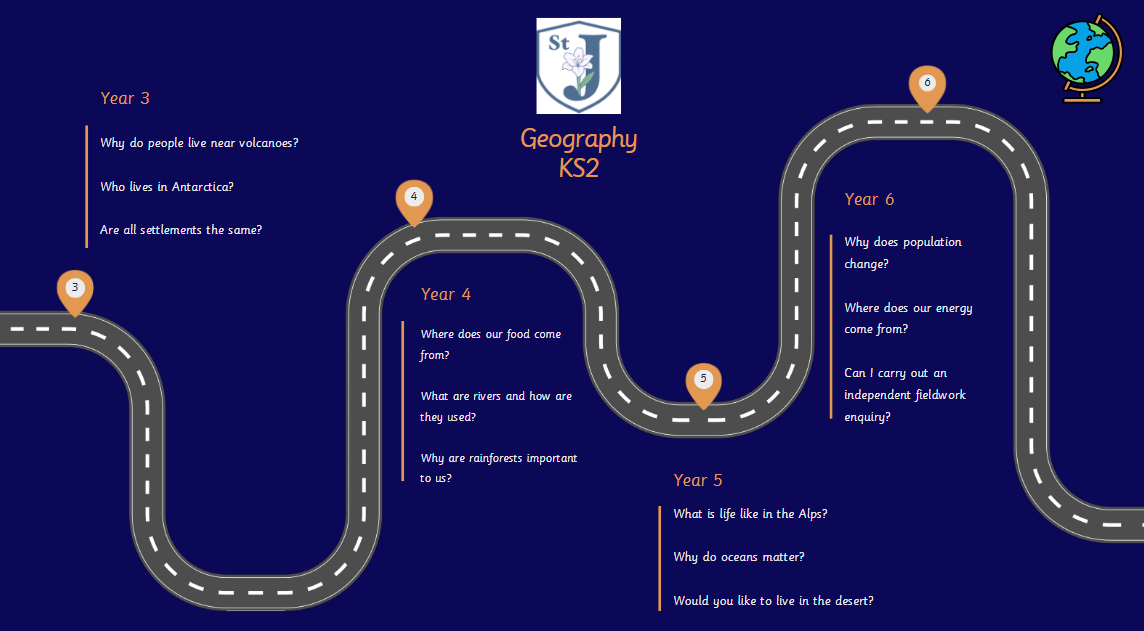
At St Joseph’s, Geography is taught through the Kapow scheme of learning, which provides a clear and progressive curriculum. Key knowledge and skills are revisited throughout each year group, helping pupils build their understanding over time. Lessons encourage children to ask questions, investigate places, collect information and take part in fieldwork so that they can develop their geographical knowledge and skills.
Pupils develop a good understanding of their local area and the wider world. They learn about different places, cultures and environments, helping them to appreciate diversity and understand global issues. Through enquiry and fieldwork, children become confident and curious learners who can explore, explain and make sense of the world around them.
At St Joseph’s, we want our pupils to:
• Develop a sense of wonder and respect for the world as God’s creation.
• Learn about different places, people and environments, and understand how they are connected.
• Ask questions about the world and use geographical skills to investigate and find answers.
• Understand how their actions can affect the environment and how they can care for others and the world around them.
The Kapow Primary scheme of learning provides a progressive curriculum that builds knowledge and skills over time. Through our Catholic ethos, pupils are encouraged to reflect on their role as stewards of God’s creation and their responsibility to care for the world and those within it.
Key features of our Geography curriculum include:
• Weekly Geography lessons that revisit and build on previous learning.
• Opportunities to explore local, national and global geography.
• Fieldwork activities, including map work, observations and local area studies.
• Links to Catholic Social Teaching through topics such as sustainability, climate change and global communities.
• High-quality resources, including maps, atlases and digital technology, to support learning.
By the time pupils leave St Joseph’s, they will:
• Have a good understanding of the world, its people and environments.
• Show respect for God's creation and recognise the importance of caring for it.
• Use geographical vocabulary, knowledge and skills with confidence.
• Ask questions, analyse information and explain their ideas about geographical issues.
• Understand how they can make a positive contribution to their local community and the wider world.
• Be well prepared for the next stage of their education.
Through Geography, we aim to develop curious, knowledgeable and compassionate pupils who appreciate the diversity of our world and are inspired to care for both people and the planet.
Modern Foreign Languages
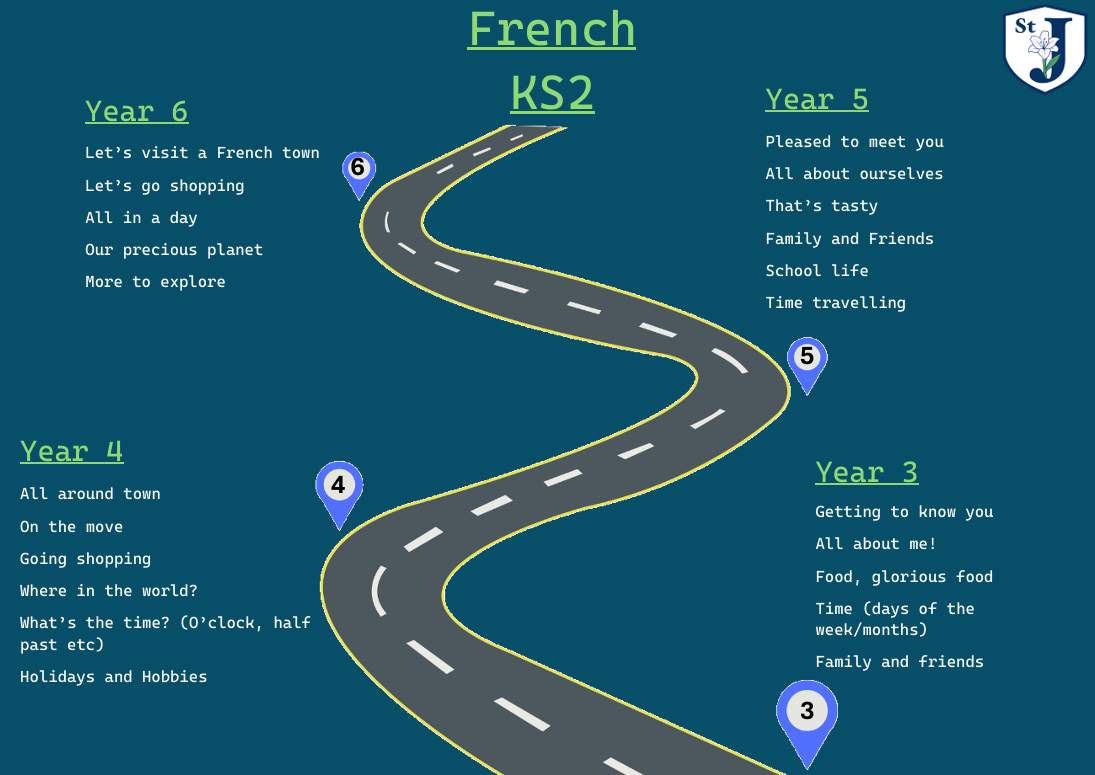
At St Joseph’s, we realise the importance of teaching languages. Learning a new language opens doors to understanding different cultures, broadening horizons, and building confidence. Through engaging, progressive, and creative French lessons, our children develop a strong foundation in listening, speaking, reading, and writing in French.
Our French curriculum (Years 3–6) is guided by the Twinkl PlanIt French scheme and fully aligned with the National Curriculum for Modern Foreign Languages, aiming to foster enthusiasm, curiosity and competence in a new language. Lessons are inclusive, culturally rich, and structured to support progression and fluency. We make language learning fun and purposeful through songs, stories, role play, and real-life scenarios.
Art and Design
At St Joseph’s Catholic Primary School, Art is a valued part of our curriculum and reflects our mission of Welcoming All, Nurturing Belief and Inspiring Futures. We believe that every child is an artist and should be given opportunities to develop confidence, creativity and self-expression through a wide range of artistic experiences. Our curriculum is designed to inspire pupils to explore, experiment and create, while developing an appreciation of art, culture and beauty in the world around them.
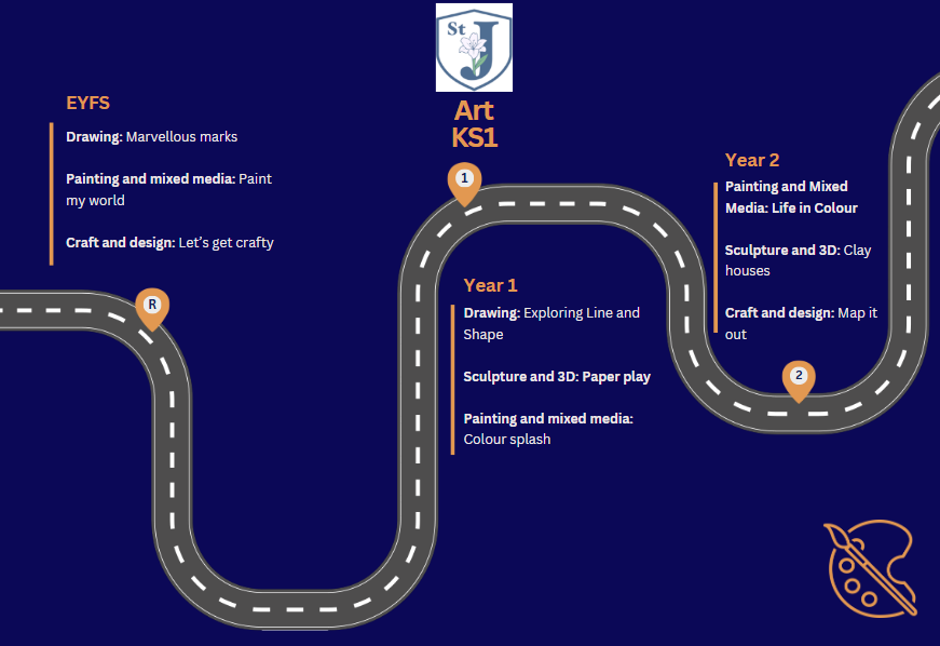
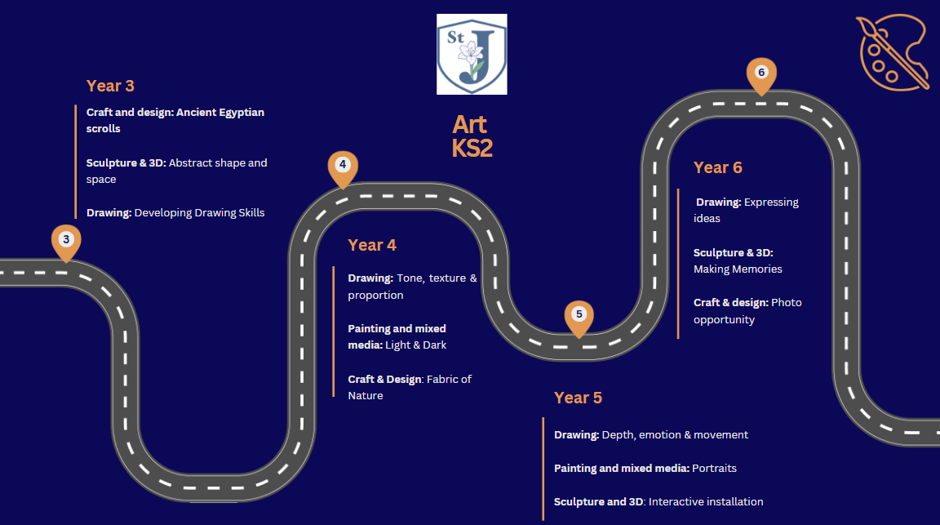
At St Joseph’s, we use the Kapow Art and Design scheme to provide a progressive and engaging curriculum that develops pupils’ knowledge, skills and understanding from EYFS to Year 6. The curriculum follows a spiral approach, allowing children to revisit and build upon key concepts, techniques and artistic processes with increasing depth and complexity. Through the strands of generating ideas, using sketchbooks, making, knowledge of artists and evaluating and analysing, pupils develop technical skills alongside creativity, critical thinking and cultural awareness.
Our primary aim in teaching Art is to nurture children's creativity and imagination while equipping them with the knowledge and skills needed to communicate ideas visually. Children study a diverse range of artists, designers and craftspeople from different cultures, periods and backgrounds, enabling them to understand how art reflects and shapes society, history and faith. Throughout their learning journey, pupils are encouraged to experiment with a variety of media, refine their techniques and develop their own unique artistic style.
In Key Stage 1, children are introduced to foundational artistic skills through drawing, painting, collage, sculpture and printing, often linked to wider curriculum themes. In Key Stage 2, pupils build upon these foundations by exploring more sophisticated techniques, artistic movements and creative processes. They are encouraged to analyse and evaluate artwork, make connections between artists and historical contexts, and reflect critically on their own work and that of others.
Development of Knowledge and Skills
Generating Ideas
Children develop creativity, independence and imagination by exploring, experimenting and generating original ideas. They are encouraged to take risks, solve problems and produce personal responses to artistic challenges.
Making Skills
Pupils develop practical knowledge and understanding of a wide range of media, materials and techniques. They learn to apply the formal elements of art, including line, shape, colour, tone, pattern, texture, form and space, to create purposeful and expressive outcomes.
Evaluating and Analysing
Children learn to discuss, interpret and evaluate artwork using appropriate artistic vocabulary. They develop the ability to reflect on their own creative process, analyse the work of artists and consider the purpose and impact of art in different contexts.
Knowledge of Artists
Pupils study a diverse range of traditional and contemporary artists, designers and craftspeople. They explore how artistic styles, techniques and ideas have developed over time and how art can communicate beliefs, experiences and cultural identity.
Using Sketchbooks
Sketchbooks are used as an important tool for creativity and reflection. Children record observations, experiment with techniques, develop ideas and evaluate their work, demonstrating their artistic journey and progression over time.
The appreciation of art and opportunities for creative response are embedded throughout the life of our Catholic school. Meaningful links are made with subjects such as Religious Education, History, English and Geography, allowing children to deepen their understanding through artistic expression. Through exploring a diverse range of artists and cultures, pupils develop respect, curiosity and an appreciation of the richness of our global community, while recognising and celebrating the unique gifts and talents God has given them.
Music
At St Joseph's, Music is taught following the Kapow scheme of work. Our aim is to enable children to enjoy music through the development of listening skills and musical appreciation. Children are encouraged to compose and perform both vocal and instrumental pieces in a wide variety of styles.
 Personal and Social Education / Relationships & Sex Education
We are committed to the education of the whole child through a broad and balanced curriculum. This includes the teaching of RSE (Relationships and Sex Education) and PSHE (Personal, Social and Health Education) at a level which is appropriate to the age and stage of development of our children.
We aim to:
- Help them develop confidence and responsibility in themselves, and to help them to make the most of their abilities.
- Help them prepare to play an active role as good citizens.
- Help them to develop a safe & healthy lifestyle.
- Help them to develop happy relationships and to be aware of and respect the differences between people.
Further aspects are covered through other areas of the curriculum.
Relationships and Sex Education is taught to all ages throughout the school, at an age appropriate level. It includes health education, sex education, moral and social interaction; equipping all children with the clear and scientific information they need to maintain successful and happy relationships and healthy minds and bodies.
Please find below the Knowledge Organisers for subjects taught in the first half of the Autumn term: